
Providing the Country with a cutting edge understanding of the Earth-Space environment, enabling us to better live, work, and study in space and here on Earth.
To ensure sustained scientific and technological progress, we provide foundations in theory, modeling, data analysis, data archival, instrumentation development, and mission formulation. We have an important role in enabling the development of long-lead technology and science as well as maintaining a knowledge base in fields necessary for the further development, safety, and security of our country.
Geospace Dynamics Constellation (GDC)
Exploring the Heart of Space Weather with the Geospace Dynamics Constellation
Doug Rowland | The Geospace Dynamics Constellation, or GDC, will provide the first direct global measurements of Earth’s atmospheric interface to space — a region where beauty and hazards co-exist - where space weather disturbances impact communication and navigation signals, satellite orbits, and induced currents that can trigger power outages on Earth. GDC’s unprecedented multi-point observations in the heart of this interface region will provide a generational shift in perspective on this region, allowing scientists to understand this complex, interconnected system as a whole. NASA Science Theater at AGU 2020!
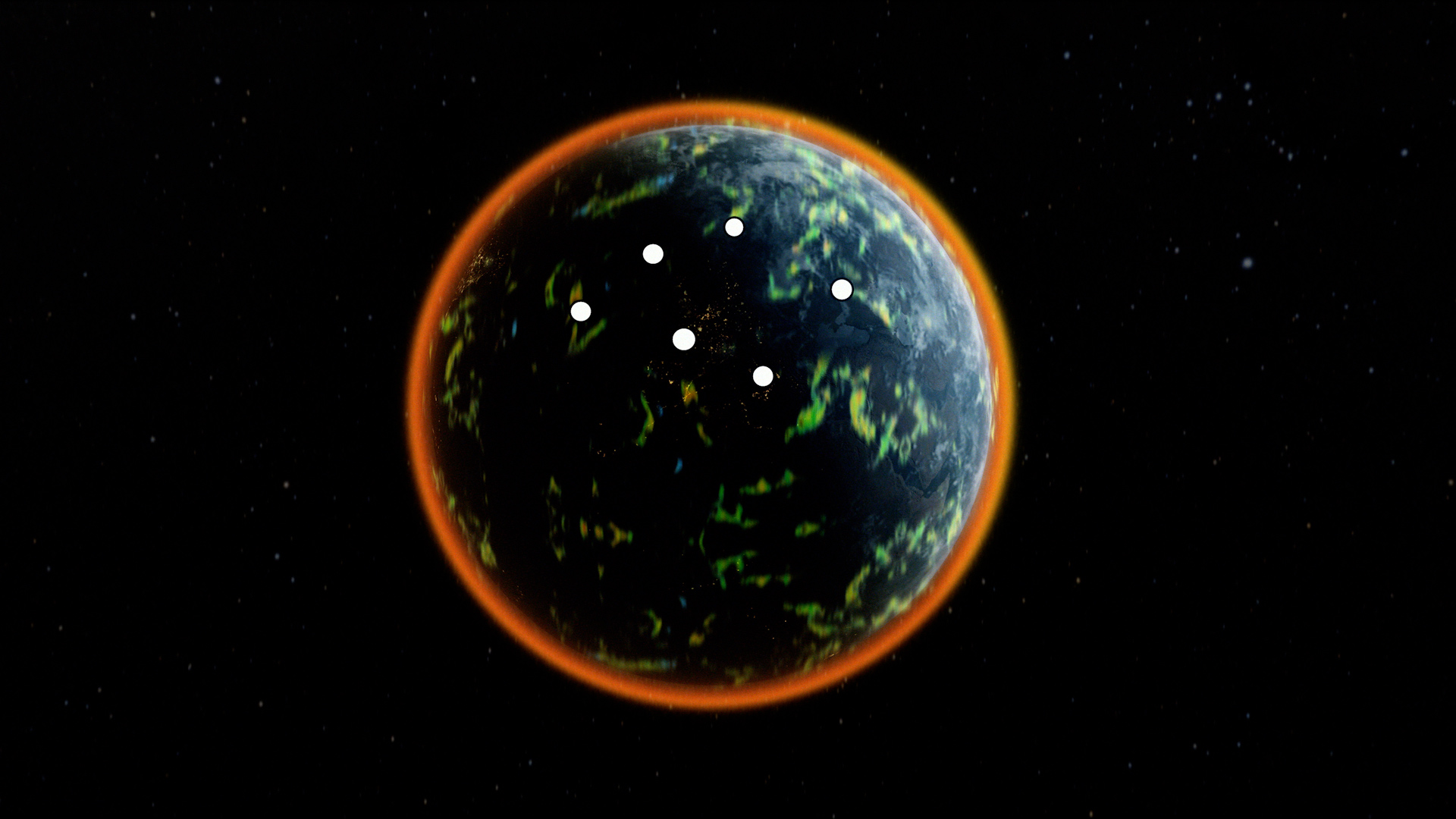
Find out more at the GDC Website
GDC Mission webpage. Within the region connecting our home to space, we see how weather from above and below impact our ability to live and work.

The Latest GDC Fact Sheet
The latest version fo the 2 page fact sheet is on our ITM resource page and other GDC specific resources are at the mission website .
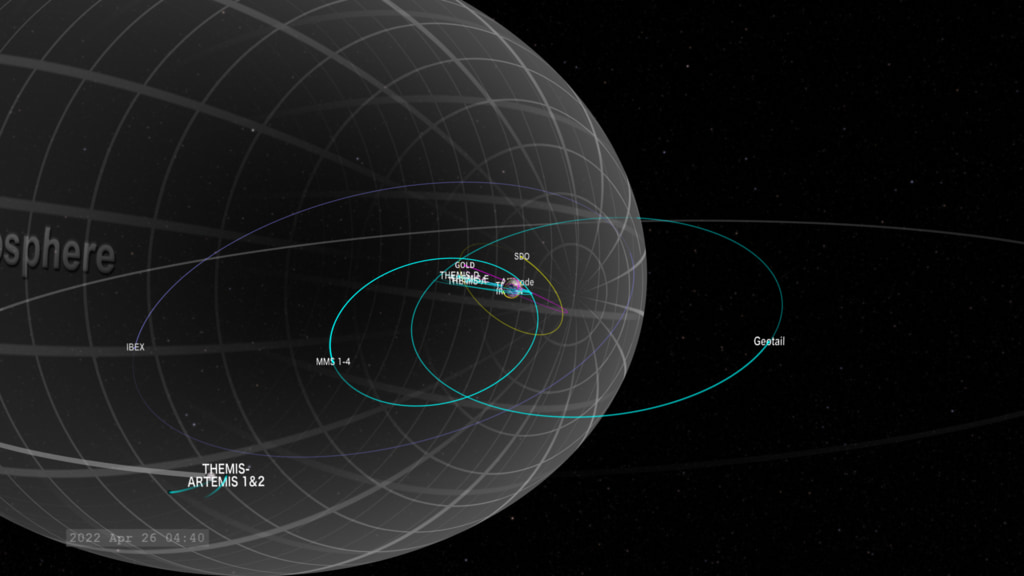
Planned GDC Ephemeris
GDC planned ephemeris data now available for download at the mission website. Start planning now for how you will interact with GDC!
Featured Videos
A Solar Wind Sea Shanty
Parodying the classic sea shanty "The Wellerman," “The Solar Wind: A Heliophysics Sea Shanty” illuminates one of the primary connections between the Sun and Earth, the solar wind. This video can be shared and downloaded at YouTube .
Welcome to the Ionosphere!
This little-explored region exists between space and Earth. It is home to the aurora, the international space station, a variety of satellites, and radio communication waves. Join us as we venture to this interface to space! This video can be downloaded from the Scientific Visualization Studio
Chasing Lightning: Spritacular
Follow along and watch this wonderful introduction to our newest citizen science group, Spritacular, as they learn more about all kinds of lightning, from elves, sprits, to transient luminous events. Get involved at Spritacular.org
Discovering Earth’s Third Global Energy Field
For nearly 60 years, scientists have studied the "polar wind," a stream of particles escaping Earth's poles into space, theorizing that a weak, unmeasured ambipolar electric field drives the outflow, a theory finally supported by recent findings. Learn more here: https://go.nasa.gov/3XcDDLD
Citizen Science
You, too, can get involved with NASA Science
Science is for everyone and we want you to get involved! Check out all the amazing ways at the Goddard Citizen Science website!
Spritacular
Join the chase of lightning from the ground, engage with a global community of observers, and contribute your observations for NASA Science at Spritacular!

Aurorasaurus
Want to learn more about the aurora and help scientist understand these dancing lights? Join up with others at Aurorasaurus and even get emails when the aurora might be in your area!
Radio JOVE
Space is filled with radio waves! Help scientists learn more about where all these waves come from and how they are used to tell us more about our place in the universe at Radio JOVE.
Apollo 14: A View from Antares
Apollo 14's Lunar Module Antares landed on the Moon on February 5, 1971. Toward the end of the stay astronaut Ed Mitchell snapped a series of photos of the lunar surface while looking out a window, assembled into this detailed mosaic by Apollo Lunar Surface Journal editor Eric Jones. The view looks across the Fra Mauro highlands to the northwest of the landing site after the Apollo 14 astronauts had completed their second and final walk on the Moon. Prominent in the foreground is their Modular Equipment Transporter, a two-wheeled, rickshaw-like device used to carry tools and samples. Near the horizon at top center is a 1.5 meter wide boulder dubbed Turtle rock. In the shallow crater below Turtle rock is the long white handle of a sampling instrument, thrown there javelin-style by Mitchell. Mitchell's fellow moonwalker and first American in space, Alan Shepard, also used a makeshift six iron to hit two golf balls. One of Shepard's golf balls is just visible as a white spot below Mitchell's javelin.